Hours of Operation Mon – Thu: 8AM – 6PM | Fri: 8AM – 4PM | Sat – Sun: Closed
Call or Text: (804) 303-9622
In case of emergency, call 911
ZoeRVA Health will be closed on 11/26-11/27 for Thanksgiving
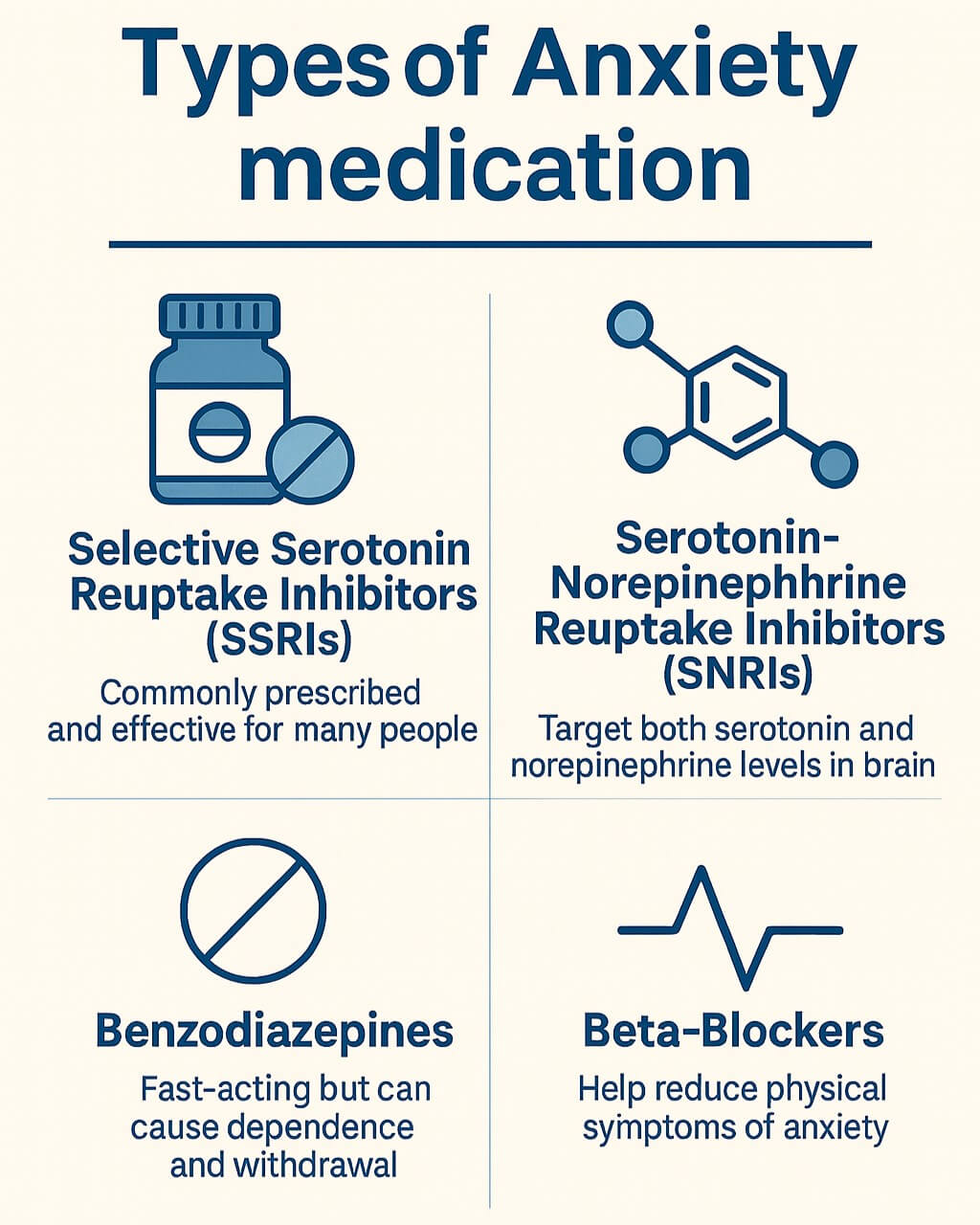
The types of medications used to treat anxiety differ in how fast they work, how they affect your body, and their risk levels.
Several types of medications can help treat anxiety. The best choice depends on your diagnosis, symptom severity, medical history, the other medications you take, and how your body responds to a specific medication. The psychiatric nurse practitioners at Zoe can help determine which option is most appropriate.
These are often considered first-line treatments because they are effective and generally safe for long-term use but may take several weeks to start working fully.
Another common first-line option for anxiety disorders that also generally require several weeks to achieve their full effect.
These controlled substances can reduce anxiety quickly, but they carry risks of dependence and are generally used short-term or for specific situations.
Other medications can be useful in specific situations depending on symptoms treated.
Beta-blockers (ex. propranolol) can help control physical symptoms like a racing heart or trembling during performance or situational anxiety.
Buspirone (ex. BuSpar®) is not habit-forming and may be useful for long-term treatment. It is often prescribed together with an antidepressant, and may take up to 4 weeks to achieve results.
Hydroxyzine (ex. Vistaril®) is an antihistamine that can help reduce anxiety symptoms quickly and may be prescribed as needed. It is non-habit-forming.
Important Notes:
Disclaimer: This content is provided for informational or educational purposes only. It is not intended to be a substitute for informed medical advice or care. You should not use this information to diagnose or treat any health issue without consulting your healthcare provider.
More Information:
We offer counseling and psychiatric medication management services that allow individuals to meet their mental health goals through clinical care that is respectful and collaborative.
Same-day access to mental health services is available at all Virginia CSBs
Suicide & Crisis Lifeline: Call or Text 988
MHAV’s Warm Line: 1 (866) 400-6428
Crisis Text Line: Text “HOME” to 741741
Zoe Therapy Services – Innslake
4191 Innslake Dr, Ste 211
Glen Allen, VA 23060
Zoe Therapy Services – Forest
7201 Glen Forest Dr, Ste 304
Richmond, VA 23226
Zoe Therapy Services – Southside
2808 Fox Chase Lane
Midlothian, VA 23112

Hours of Operation
Mon–Thu: 8AM–6PM | Fri: 8AM–4PM
Sat–Sun: Closed